Latest Activities
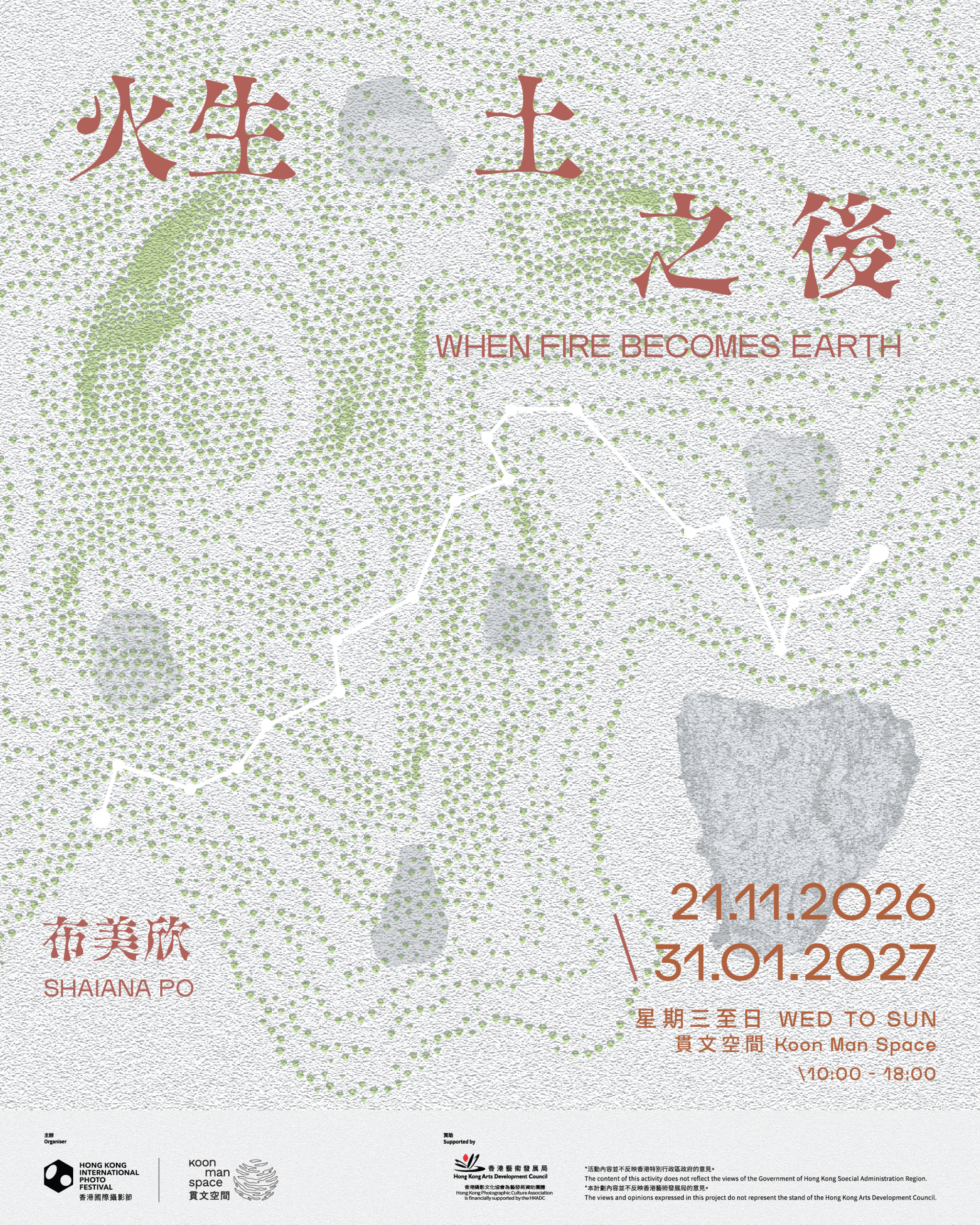
When Fire Becomes Earth – Moss from Ash
Shaiana Po
2026.11.21 – 2027.01.31
A deep-ecology visual study of Tai Mo Shan
Some 165 million years ago, in the Jurassic, the land we now call Hong Kong shook with volcanic force. Ash and broken stone fell and settled, at least 600 metres deep, and in time hardened into the tuff of Tai Mo Shan.
We are quick to call a silent volcano finished, yet the mountain tells another story. Wind and rain have softened its stone into soil, and mist returns again and again to rest on the summit. In the shelter of that ancient violence, small lives have found a foothold and stayed, generation after generation.
This exhibition follows the mountain’s textures: the cracks in stone, the edge of moss, the veins of a fallen leaf. Each is gathered and studied closely, as a trace of what has withered and what has survived. Behind this attention lies deep ecology, the belief that nature’s worth does not depend on how useful it is to us. On this mountain, no one stands above rock, stream or insect. Are we guests upon this mountain, or the mountain itself briefly given a name?
“You are now, traveller, what I once was, and what I am now you will one day become.” These words are inscribed on a pair of vertical plaques outside the gate of the Catholic cemetery in Happy Valley. They are said to be adapted from a Latin epitaph by the medieval scholar Alcuin of York: Quod nunc es fueram, famosus in orbe, viator, et quod nunc ego sum, tuque futurus eris. To return to the earth is not only to end, it is to rejoin the slow cycle of matter and become another life, as the ancient volcano did, and as we, in our turn, will.
More Information↘